◆ Lucknow Waterproofing & Building Climate Specialists

Ancient Principles.
Modern Materials.

We stop water getting in and stop heat getting through. Integrated building climate systems — waterproofing, cool roof coatings, Miyawaki micro-forests, natural cooling solutions and jaali screens — engineered for Lucknow's 46°C summers and monsoon downpours.

Written cover, terms up front
Mutkkipur, Lucknow — all UP
Open daily till 8 pm
2–4°C
Cooler indoors
5 yr
Workmanship cover
SOLAR REFLECTED MONSOON COATING · MEMBRANE · GREEN BUFFER · JAALI
Written, bounded cover
Residential · Commercial · Institutional
Low-carbon, passive-first design
Free thermal & leak survey
46°C
Lucknow summer peak
2 to 4°C
Indoor air temp drop
25–35%
Lower summer cooling load
5yr
Workmanship cover

Indoor figure is the range cited by NRDC for cool roofs against conventional roofs; cooling-load range is for compliant high-SRI systems. Your building is measured before and after, so you see its own numbers.

The Lucknow Problem

Two seasons. One building. Both punishing.

Between May and June the terrace slab crosses 65°C and dumps that heat into the rooms below all night. Then the monsoon arrives, finds every hairline crack in that same thermally-fatigued slab, and the seepage starts. Most contractors treat these as two separate jobs. They aren't.

Thermal cycling cracks the slab

Daily 40°C swings expand and contract concrete until micro-cracks open. That's the entry point every leak uses.

Seepage destroys plaster and steel

Water reaching the reinforcement starts corrosion that no amount of repainting will stop. Damp patches are the last symptom, not the first.

Cooling bills climb every year

An uninsulated dark terrace re-radiates heat until 2 am. Your AC runs against a ceiling that is itself a heater.

Patch repairs fail in 18 months

Cement-and-chemical dabs over an unprepared surface debond at the first thermal cycle. You pay twice, then three times.

UNTREATED SLAB 65°C 34°C indoors URBAN COOL SYSTEM 38°C 30°C indoors THE FULL BUILD-UP 1 · Reflective cool-roof topcoat (SRI 105+) 2 · UV-stable protective screed 3 · Elastomeric waterproof membrane 4 · Crack-bridging fibre reinforcement 5 · Penetrating primer & surface prep 6 · Existing RCC slab (repaired & levelled)
Why Bother At All

Why waterproofing and cool roof coating are not cosmetic

Both are usually postponed, because neither fixes something that looks broken today. Here is what each one is actually doing for the building, and what it costs to keep putting them off.

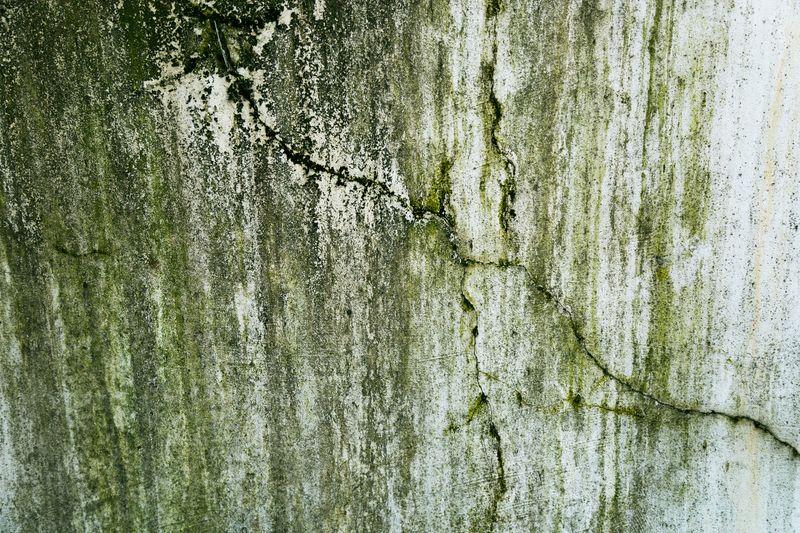
Weathered concrete wall showing cracks and algae growth caused by persistent damp
Waterproofing

You are protecting steel, not plaster

The damp patch on your ceiling is the symptom everyone treats. The actual damage is happening out of sight: water that reaches the reinforcement inside your RCC slab starts corroding it, and rusting steel expands to several times its original volume. That expansion cracks the concrete from the inside out. Repainting the ceiling does nothing about it.

Corrosion is irreversible

You can dry a wall. You cannot un-rust reinforcement. Once section loss begins, the only remedies are structural repair or replacement — both an order of magnitude dearer than sealing the roof was.

It is a code requirement, not an upgrade

Waterproofing and damp-proofing have their own family of Indian Standards, and the National Building Code treats them as part of proper construction — not as an optional finish you add if there is budget left.

Damp is a health problem

Persistent moisture in walls feeds mould and dust mites, both established triggers for asthma and allergic rhinitis. In a north Indian monsoon a wet wall stays biologically active for months.

The bill only ever goes up

A crack sealed this year is a coating job. The same crack in five years is a slab repair, new plaster, new paint, possibly new wiring where water has tracked along conduits.

Exposed flat concrete rooftop under direct sun in New Delhi
Cool Roof Coating

Your roof is a heater you paid for

An ordinary dark terrace absorbs the great majority of the solar radiation falling on it, stores that energy in the slab through the afternoon, and releases it downward into your top floor for hours after sunset. That is why the room is still hot at midnight. A reflective coating stops the energy from being absorbed in the first place — which is a great deal cheaper than removing it afterwards with an air conditioner.

National energy code already asks for it

India's Energy Conservation Building Code sets minimum roof performance — an initial solar reflectance of at least 0.7 and thermal emittance of at least 0.75. Reflective roofs are written into national policy, not a fringe idea.

Measured indoor cooling

Research cited by NRDC puts the indoor air temperature reduction from cool roofs at roughly 2 to 4°C against a conventional roof, depending on location, roof type and how reflective the surface is. Surface temperature falls far more.

Less load, less running cost

A cooler ceiling means the air conditioner cycles less often and for shorter periods. The saving arrives every summer for the life of the coating, with no moving parts and nothing to service.

It cools the street, not just the flat

Reflective roofs and pavements together with shade trees can lower a city's summer air temperature by around 2°C. Every treated roof takes a small amount of heat out of the neighbourhood.

What waiting actually costs

The same defect, priced at four different stages. This is why we push people to treat a roof in the year they first notice it.

Year 0 · Sound slab
Preventive coating

No leak yet. Surface prep, primer and a reflective or protective coat. Two to three days, and you also get the cooling benefit immediately.

BaselineLowest possible cost
Year 1–2 · Hairline cracks
Crack repair + membrane

Damp shows after heavy rain and dries out. Cracks routed and grouted, slope corrected, full membrane laid. Still entirely a surface job.

2–3×Of the baseline
Year 3–5 · Plaster failing
Membrane + interior reinstatement

Ceiling plaster spalling, efflorescence on walls, paint no longer holding. Now you pay for the roof and for repairing everything underneath it.

4–6×Of the baseline
Year 5+ · Steel exposed
Structural repair

Reinforcement corroding and concrete cover breaking away. Rust removal, passivation, polymer mortar rebuild, then the waterproofing you needed all along.

8×+Of the baseline
The standards and policy this work sits under

We specify to published codes rather than to habit. These are the references worth knowing before you compare quotations.

IS 3067
Design details & preparatory work

The Bureau of Indian Standards code of practice covering general design details and preparatory work for damp-proofing and waterproofing of buildings — the surface preparation stage most contractors shorten.

ECBC 2017
Energy Conservation Building Code

Sets minimum building envelope performance in India, including roof solar reflectance of at least 0.7 and thermal emittance of at least 0.75 — the benchmark a genuine cool roof coating should be able to document.

Direction of travel
Cool roofs are becoming mandatory

Telangana's Cool Roof Policy 2023–28 already makes cool roofs compulsory for government, commercial and larger residential buildings. Other states are following. Treating a roof now is ahead of the curve, not behind it.

Performance figures above are published ranges for compliant systems. Your building is measured before and after application so you see its own numbers, not ours.

What We Do

Eight systems. One integrated envelope.

Every service below is delivered as an engineered system — surveyed, specified, warranted — not as a bucket of chemicals and a brush. Mix them, or start with the one that's hurting most.

Terrace & Roof Waterproofing

Full-system treatment of the roof slab: crack routing and grouting, slope correction, fibre-reinforced elastomeric membrane and a UV-stable topcoat. We fix the falls so water actually leaves the roof instead of ponding on it — the single biggest cause of repeat failure in Lucknow terraces.

5-yr workmanshipCrack bridgingSlope correctionPonding fix

Bathroom & Wet Area Waterproofing

The leak in your living room ceiling almost always starts in the bathroom above it. We treat sunken slabs, drain mouths and pipe penetrations with a cementitious flexible coating plus tape-sealed corners, then pressure-test before tiling. Done right once, it outlives the tiles.

Pre-tiling & retrofitPipe collarsFlood tested

Basement & Foundation Waterproofing

Negative-side and positive-side treatment for basements, lift pits, water tanks and retaining walls. Crystalline slurries that grow into the concrete pore structure, PU injection grouting for active leaks, and drainage detailing that relieves hydrostatic pressure instead of fighting it.

PU injectionCrystallineWater tanksLift pits

External Wall & Crack Repair

Structural crack stitching, plaster reinstatement and breathable elastomeric wall coatings that stop driving rain from soaking in while still letting trapped vapour escape. Especially critical on south and west facades that take the worst of both sun and monsoon.

BreathableCrack stitchingAnti-carbonation

Cool Roof Reflective Coating

High-albedo, high-emissivity coatings that bounce solar radiation back to the sky instead of storing it in your slab. Independently the highest return-per-rupee intervention we offer: documented surface temperature reduction of 20–25°C, and roughly 2–4°C of indoor air temperature on the floor beneath.

SRI 105+ECBC compliantWashableWalkable

Miyawaki Micro-Forest Installation

Dense native multi-layer planting on plots from 100 sq ft upward. Soil amendment, 3–4 canopy layers of indigenous species, mulching and a two-year maintenance plan. Grows ten times faster than conventional landscaping and drops ambient temperature around the building measurably within three summers.

Native species2-yr maintenanceCSR-readyCarbon sink

Natural Cooling Solutions

Living and plant-based systems placed on the west and south exposures, where the low afternoon sun does the most damage. They intercept radiation before it reaches the wall, hold a cushion of shaded air against the surface, and cool further by transpiration — a mechanism no coating can reproduce. All of it is renewable, low in embodied carbon, and drawn from methods that worked in this climate long before air conditioning.

  • Green bamboo screens & hedges — living clumping bamboo grown as a standing screen; dense, fast and evaporatively cooling.
  • Treated bamboo pergolas & louvres — harvested culms, borax-treated against borers, for fixed shading over terraces and windows.
  • Vetiver (khus) screens — the traditional north Indian evaporative screen, still the cheapest cooling available in a dry May.
  • Creeper trellises — madhumalti, bougainvillea or passion flower trained on a frame set clear of the wall.
  • Vertical green walls — modular planted panels for courtyards, entrances and compound walls with no ground area to spare.
  • Shade tree placement — native species sited by sun path, so the canopy lands on the wall that actually needs it.
Living systemsBorax treatedRenewableLow embodied carbon

Jaali Screen Systems

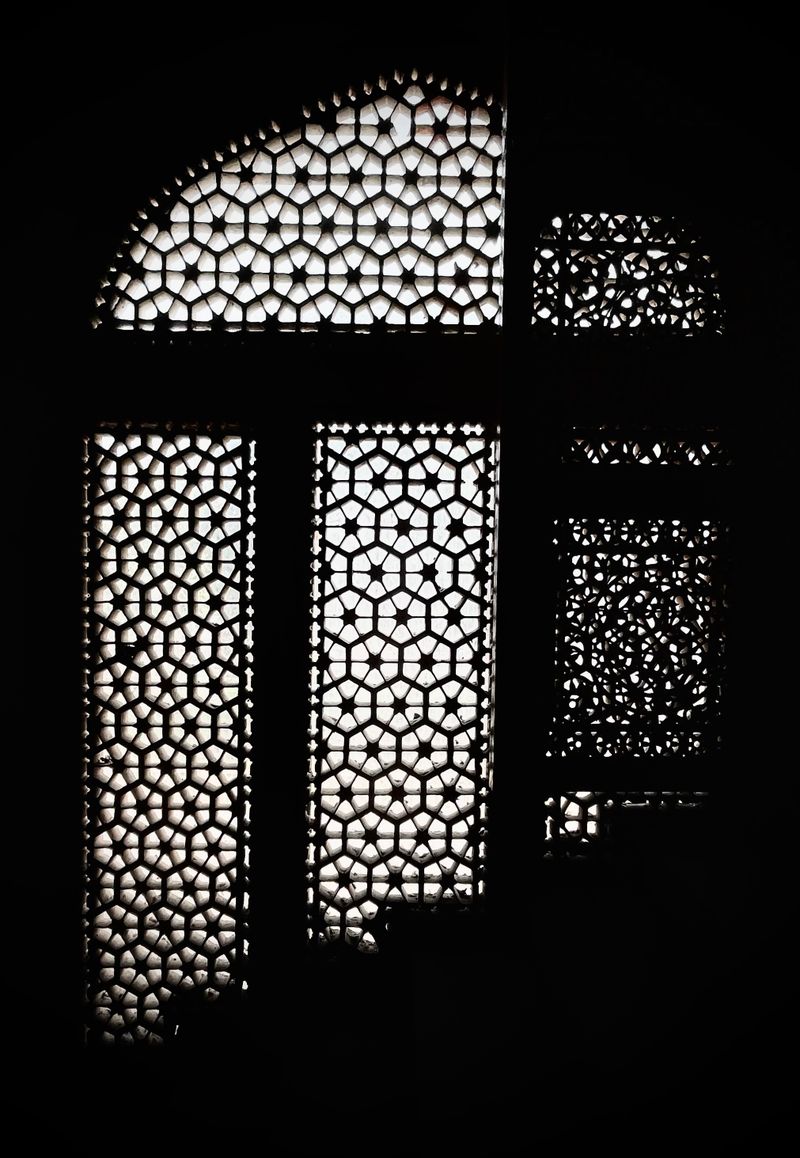
Perforated screens in terracotta, GFRC, concrete or metal — the oldest passive cooling device in Indian architecture, engineered for contemporary facades. Jaali cuts direct glare, accelerates cross-ventilation through the Venturi effect, and gives privacy without shutting out daylight or breeze.

  • Terracotta — traditional, breathable, and it cools the air passing through it.
  • GFRC & precast concrete — larger spans and custom geometry for modern facades.
  • Perforated metal — the lightest option, for retrofits and balcony infills.
Custom patternsTerracotta / GFRCGlare control
The Engineering

Why our systems hold when patchwork fails

Three principles do most of the work. None of them are new — two of them are centuries old. What's new is the material science we use to execute them.

Reflect before you insulate

A dark terrace absorbs roughly 90% of solar radiation. A high-SRI coating reflects most of it back before it becomes heat you then have to fight with insulation or air conditioning.

DARK ROOF 65°C surface · absorbs 90% COOL ROOF · HIGH SRI 42°C surface · reflects 85%

Bridge the crack, don't fill it

Concrete moves every single day. A rigid filler fractures on the first thermal cycle. An elastomeric membrane with fibre reinforcement stretches over the moving crack for the life of the system.

RIGID FILLER Splits · water enters Fails within 1–2 monsoons ELASTOMERIC SYSTEM Stretches · stays sealed 300%+ elongation at break

Shade and evaporate

The Miyawaki method stacks four canopy layers of native species into a dense block. Shade plus transpiration lowers the air temperature entering your building — cooling that costs nothing to run and improves every year.

CANOPY TREE SUB-TREE SHRUB COOL AIR 3–5°C lower ambient within the block
Why It's Worth It

What you actually get back

Comfort is the reason people call. These are the reasons they tell their neighbours.

01

Rooms that stay liveable

Two to four degrees of indoor air temperature sounds modest until you have lived under an untreated slab. It is the difference between a bedroom you avoid until midnight and one you can use through the afternoon, and it arrives on the first hot day after application.

02

Electricity bills that fall

Air conditioners cycle less and run shorter. Households typically report 25–35% lower summer cooling load, which on most Lucknow homes pays back the coating within two to three seasons.

03

Structure that lasts decades longer

Keeping water away from reinforcement is the single most valuable thing you can do for an RCC building. Corrosion is irreversible; waterproofing is preventive maintenance, not decoration.

04

No more repainting the same ceiling

Damp patches, flaking distemper, efflorescence and fungal growth all disappear once the source is sealed. You stop spending on cosmetic repairs that were never the problem.

05

Healthier indoor air

Persistent damp breeds mould and dust mites — a direct trigger for asthma and allergic rhinitis, both rising sharply in north Indian cities. Dry walls are a health intervention.

06

Higher property value

A documented, warranted waterproofing and cool-roof system is a genuine selling point. Buyers and tenants in Lucknow ask about seepage first and top-floor heat second.

07

A measurably lower carbon footprint

Reflected solar radiation, reduced grid demand and sequestering native trees all count. For companies, our Miyawaki and green-roof work is documentable CSR and ESG evidence.

08

One accountable contractor

Roof, walls, bathrooms, shading and planting under a single scope and a single warranty. No arguments between the waterproofing man and the landscaper about whose fault the leak is.

How We Work

Six steps, no surprises

You'll know the diagnosis, the specification, the price and the timeline before anyone opens a drum on your terrace.

Free site survey

We walk the roof, walls and wet areas, trace the actual water path and take surface temperature readings. Usually 45–60 minutes, no charge, no obligation.

Written diagnosis & quote

An itemised proposal naming the exact products, coats, coverage rates and warranty. If two options make sense, you get both with the trade-offs spelled out.

Surface preparation

The step everyone else skips. Grinding, crack routing, laitance removal, slope correction and drain-mouth rebuild. Seventy per cent of a lasting job happens here.

System application

Primer, reinforcement, membrane and topcoat applied at specified wet-film thickness with the correct cure time between coats. Our supervisor logs every coat with photographs.

Testing & handover

Ponding test on terraces, flood test on bathrooms, thermal reading before and after. You get the readings, the product datasheets and the warranty certificate in one file.

Annual check-up

We return before each monsoon to inspect drains, joints and coating condition. Allowing that visit is a condition of the guarantee staying live — it is how small fixes stay small instead of becoming claims.

Specification At A Glance

Choose the system that fits the problem

Indicative scopes and cover. Final specification always follows the site survey — anyone quoting before seeing your roof is guessing.

SystemBest forCore build-upCoverTypical duration
Cool Roof Essential Top-floor overheating, sound slab, no active leak Prep + primer + 2 coats high-SRI reflective coating
2 yr workmanshipProduct: up to 5–7 yrCoating film, not sustained reflectance
2–3 days
Terrace Shield Active or historic seepage from the roof slab Crack repair + slope correction + fibre-reinforced elastomeric membrane + topcoat
5 yr workmanshipProduct: up to 7 yrRegistered in your name at purchase
5–8 days
Integrated Envelope Whole-building heat and water control Terrace Shield + cool roof topcoat + external wall coating + jaali or natural shading
5 yr workmanshipProduct: per componentEach element warranted separately
2–4 weeks
Wet Area Seal Bathrooms, kitchens, balconies, sunken slabs Cementitious flexible coating + corner tapes + pipe collars + flood test
3 yr workmanshipExcludes plumbing failureMembrane only, not the pipes
2–4 days per area
Basement Defence Basements, lift pits, water tanks, retaining walls Crystalline slurry + PU injection grouting + drainage detailing
2 yr workmanshipAssessed per siteWater table and ground conditions vary
1–2 weeks
Miyawaki Micro-Forest Campuses, factories, schools, housing societies, CSR projects Soil analysis + amendment + 3–4 layer native planting + mulch + drip
2 yr maintenance contractService contract, not a warranty
1–2 weeks planting
Natural & Passive Shade West and south facades, courtyards, terraces Jaali screens and / or green bamboo, treated bamboo pergolas, vetiver screens, creeper trellises and green walls
2 yr installationLiving systems need establishingBamboo culms need periodic retreatment
1–3 weeks

What the workmanship guarantee covers

  • Water ingress through an area we treated, where the cause is our application or our surface preparation
  • Debonding, blistering or premature film failure of the system we laid
  • Defective detailing at drain mouths, parapet junctions, corners and pipe penetrations within our scope
  • Re-application of the failed area at our cost, up to the value of that portion of the original contract
  • A pre-monsoon inspection each year, which you must allow us to carry out for the guarantee to stay valid

What it does not cover

  • Structural movement, settlement or defects in the original construction
  • New penetrations drilled through the membrane, or any third-party work over the treated surface
  • Water logging from drains left blocked, or from structures added to the roof after handover
  • Plumbing and sanitary failures behind or below a treated wet area
  • Loss of surface reflectance from ordinary dust accumulation — roofs need periodic cleaning
  • Storm, flood, earthquake and other events outside anyone’s control

Two separate things are on offer here. The product warranty is issued by the material manufacturer, runs for their stated term, and is usually capped at the value of the material — we register it in your name at purchase. The workmanship guarantee is ours, and covers our application. Full written terms are issued with your handover file, before you pay the final instalment.

Why Urban Cool

Contractors seal roofs. We manage building climate.

The name isn't decorative. Cooling and waterproofing are the same problem viewed from two seasons — and treating them together is cheaper, faster and far more durable than treating them apart.

Talk to us about your building
Diagnosis before quotation

We find where water actually enters, which is rarely where the stain appears. Quoting without tracing the path is how people end up treating the wrong surface twice.

Measured, not claimed

Infrared surface readings before and after, ponding and flood tests on completion. You see numbers, not adjectives.

Branded materials, disclosed on paper

Every quotation names the manufacturer, product code and coverage rate. No unnamed "imported chemical" — you can look up exactly what goes on your roof.

Passive first, mechanical last

Shade, reflect and ventilate before you spend on more air conditioning. Every rupee of passive cooling keeps paying back with zero running cost.

Local team, local accountability

Based in Mutkkipur, Lucknow. When something needs attention two monsoons from now, we're a phone call and twenty minutes away — not a franchise call centre.

Cover we actually service

A pre-monsoon inspection every year the guarantee is live, built into the price rather than sold back to you. Allowing it keeps your cover valid — a guarantee is a relationship, not a piece of paper you file and forget.

Typical Scopes

What each system looks like on a real building

Three worked examples of how we scope a job, so you can see roughly where your building fits before you call. These are illustrative specifications, not case studies — ask us for photographs and references from completed sites.

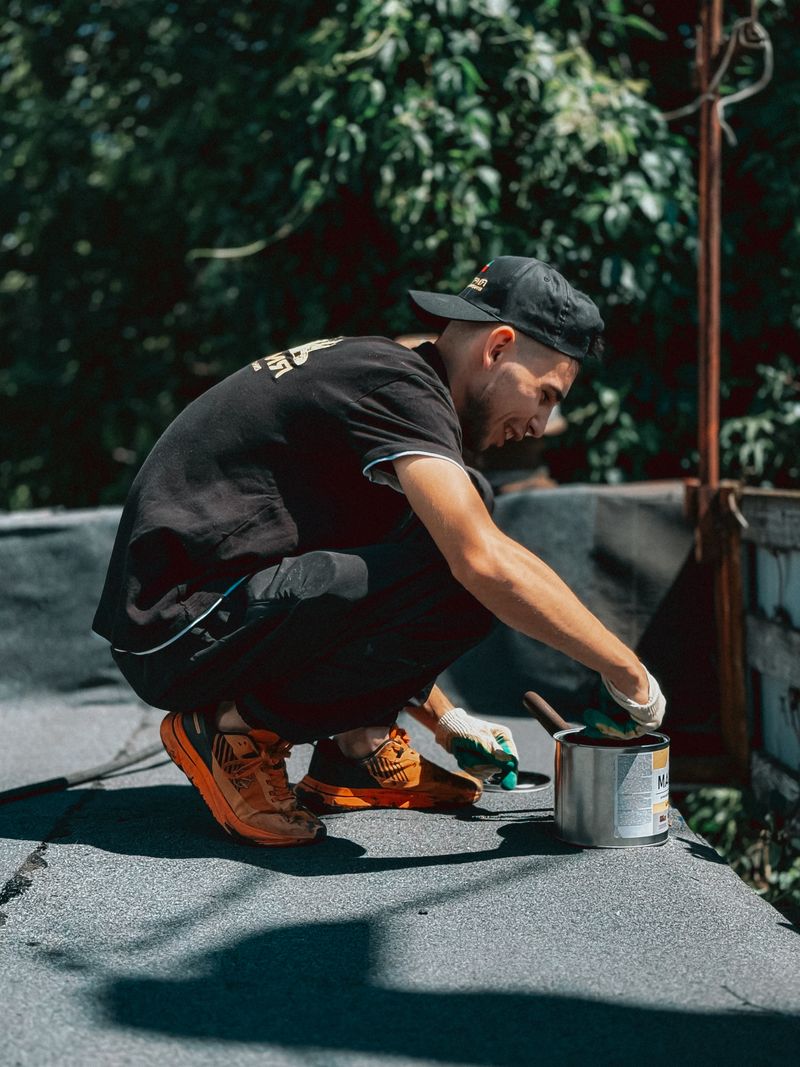
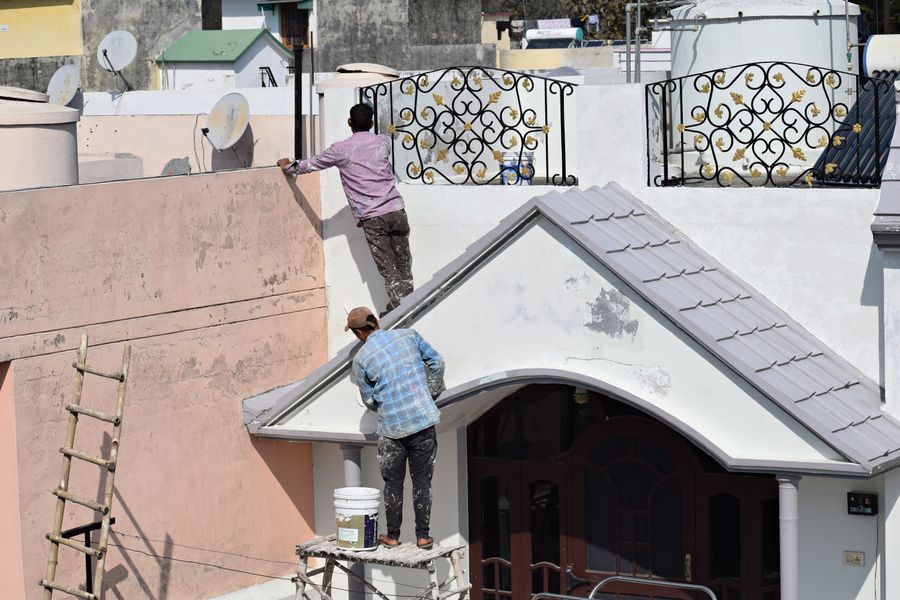
Workers applying a reflective protective coating to a building roof
Independent House

Cool Roof Essential · approx. 1,800 sq ft terrace

The usual brief: top-floor bedrooms unusable before 11 pm through May and June, but a structurally sound slab with no active leak. That points to the cheapest intervention available — surface prep, primer and two coats of high-SRI reflective coating. No membrane needed, so no membrane cost.

2 yr
Workmanship
2–3 days
On site
2 coats
Reflective
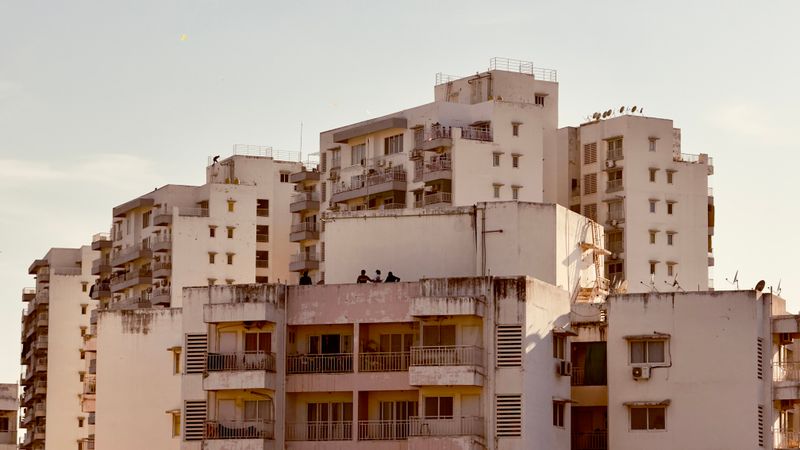
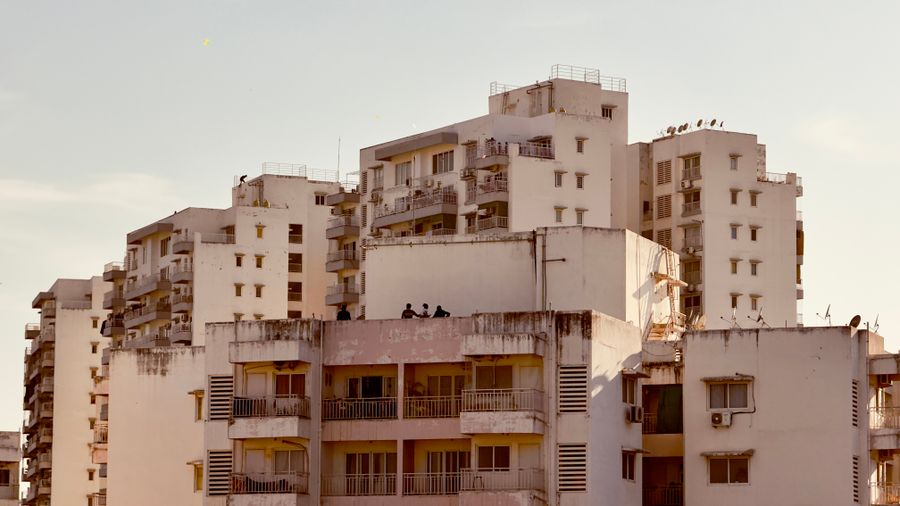
Multi-storey residential apartment buildings in India at dusk
Apartment Block

Terrace Shield plus facade jaali · approx. 24 flats

Chronic ceiling seepage in top-floor flats is usually blamed on individual bathrooms and is usually the slab. Where the survey traces it to failed joints and blocked drain mouths, the scope is a full membrane system with slope correction — and GFRC jaali on an exposed west stairwell if heat is also a complaint.

5 yr
Workmanship
2–4 wk
On site
Tested
On handover
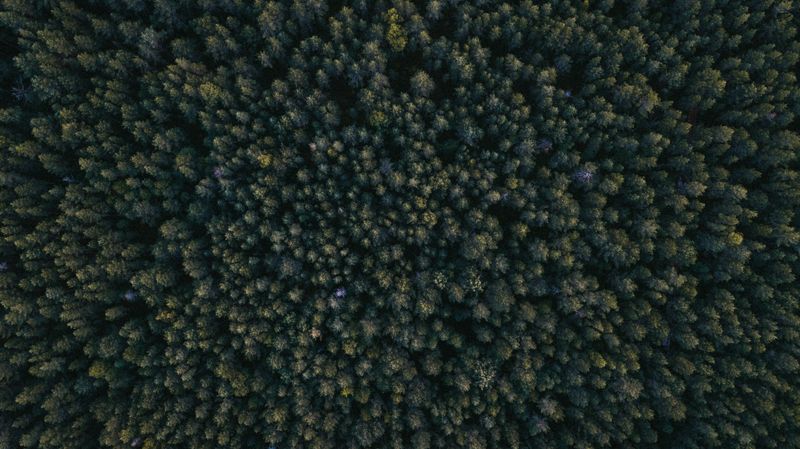
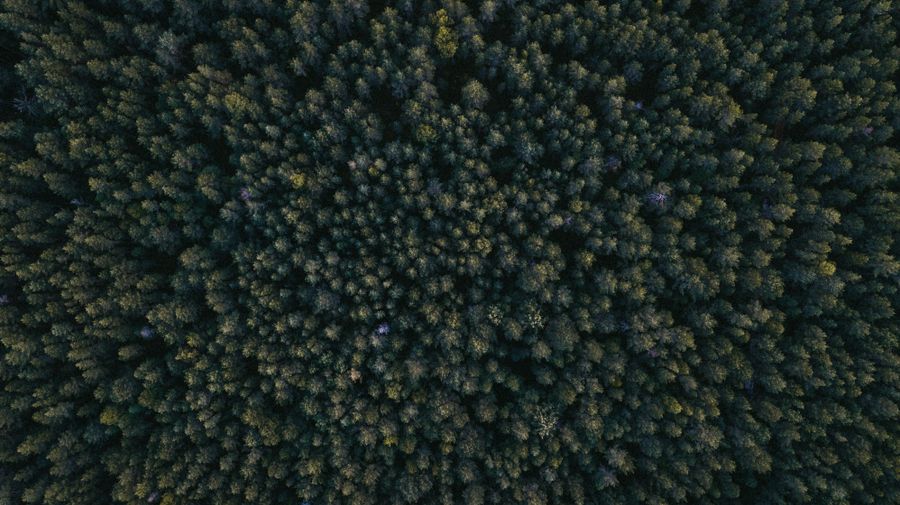
Aerial view of a dense green forest canopy of native trees
Factory or Campus

Miyawaki buffer belt · approx. 6,000 sq ft strip

A three-layer native belt — neem, jamun, arjun, gulmohar and understorey shrubs — along a western boundary, doubling as a dust screen for the shop floor. Includes soil amendment, drip irrigation and a two-year maintenance contract, with planting records suitable for CSR reporting.

3–4
Canopy layers
2 yr
Maintenance
1–2 wk
Planting

Illustrative scopes only — your specification follows the site survey. Replace these three cards with your own completed projects and photographs as you build a portfolio.

Reviews

Judge us on the work, publicly

We don’t print testimonials we wrote ourselves. Every review we have sits on our Google Business Profile, where anyone can read it — and where you can leave your own after we’ve worked on your building.

Urban Cool Solutions and Waterproofing Mubarakpur, Mutkkipur, Lucknow · Waterproofing service

Ask us for client references on any system before you commit — we’ll put you in touch with people whose buildings we’ve actually worked on.

Questions

Things people ask before they call

How much does terrace waterproofing cost in Lucknow?
It depends almost entirely on slab condition, not on area. A sound slab needing only a reflective coating is at the low end; a slab needing crack routing, slope correction and a full membrane build-up is several times that. We won't quote a rate per square foot over the phone, because the honest answer changes once we see the roof — and a rate quoted blind is how people end up with a specification that was never going to work. The survey is free and the written quote is itemised.
When is the right time of year to do this work?
October to March is ideal — dry, moderate temperatures, and full curing before the next monsoon. That said, cool roof coatings are often best applied in April or early May so you get the benefit that same summer, and emergency leak repairs can be done in dry windows during the monsoon itself. What we won't do is apply a membrane over a damp substrate, whatever the calendar says.
Will a cool roof coating really lower my indoor temperature?
On a top floor directly under an exposed roof slab, yes — measurably. Roof surface temperature typically falls 20–25°C, and research cited by NRDC puts the indoor air temperature reduction at roughly 2–4°C against a conventional roof. The effect is largest in single-storey houses and top-floor flats, smaller on lower floors, and negligible for rooms that aren't under the treated slab. We take before-and-after readings so you're not relying on our word for it.
Do I have to break the tiles to waterproof my bathroom?
Not always. If the leak is coming from the drain mouth, a pipe penetration or grout failure, targeted treatment plus injection can work without a full demolition. If the sunken slab filling is saturated or the original waterproofing has failed underneath, no surface treatment will hold and the honest answer is that the floor has to come up. We'll tell you which situation you're in after the survey, including when the cheaper option is the right one.
What exactly does the warranty cover, and why isn’t it ten years?
Because a ten-year promise from a contractor is usually worth less than a shorter one you can actually enforce. Two separate covers apply to your job. The product warranty comes from the material manufacturer — Pidilite’s Dr. Fixit Roofseal topcoat, for example, carries seven years, with liability capped at the value of the product and reducing year on year. We register that in your name at purchase, so it is yours rather than ours. On top of it sits our own workmanship guarantee, two to five years depending on the system, covering failures caused by our application or our surface preparation and capped at the value of that part of the contract. Anyone offering a decade of unlimited free re-work is either not reading their own material warranty or not expecting to be around to honour it. Full terms come with your handover file, before the final payment.
How much space do I need for a Miyawaki forest?
We've planted viable micro-forests on plots as small as 100 sq ft, though 500 sq ft and up gives you the density that makes the method work properly. The requirement isn't really area — it's a minimum of three to four hours of direct sunlight, access for soil amendment, and a water source for the first two years. After that the block is largely self-sustaining.
Is waterproofing or a cool roof required by any code?
Waterproofing has its own family of Bureau of Indian Standards codes of practice — IS 3067 covers general design details and preparatory work for damp-proofing and waterproofing of buildings, and there are separate standards for each treatment type. On the cooling side, India's Energy Conservation Building Code sets a minimum roof performance of 0.7 initial solar reflectance and 0.75 thermal emittance. Telangana has gone further and made cool roofs mandatory for government, commercial and larger residential buildings under its Cool Roof Policy 2023–28. Uttar Pradesh has no equivalent mandate yet, so for most Lucknow homes this is still voluntary — but the regulatory direction across India is clear.
Should I do waterproofing and cool roof coating together?
If the slab needs waterproofing anyway, yes — almost always. The expensive parts of a roof job are access, surface preparation and labour, and those are shared. Adding a reflective topcoat over a fresh membrane costs far less than returning to do it as a separate job later, and the reflective layer also shields the membrane from the ultraviolet exposure that ages it fastest. If your slab is sound and you have no leak, the coating alone is the sensible starting point.
Can you work on an occupied building?
Yes, and most of our work is on occupied buildings. Terrace and external work causes minimal disruption to people living inside. Bathroom waterproofing does mean losing that bathroom for two to four days, so we sequence work in multi-bathroom homes to keep one usable. We work daily until 8 pm and can adjust hours around a housing society's rules.
Which areas do you cover?
All of Lucknow — Gomti Nagar, Indira Nagar, Aliganj, Hazratganj, Alambagh, Chinhat, Mahanagar, Jankipuram, Vikas Nagar, Rajajipuram and everything between — from our base in Mutkkipur. For larger commercial and institutional projects we take work across Uttar Pradesh, including Kanpur, Barabanki, Sitapur and Ayodhya.
Are the materials safe around children and pets?
The cool roof coatings and cementitious systems we use are water-based and low-VOC, and are safe once cured. Solvent-based products and PU injection resins, where a job genuinely needs them, do require the area to be kept clear during application and curing — we'll tell you in advance exactly how long that is and which areas are affected.
The survey is free. The next monsoon isn't.

Book a site inspection and get a written diagnosis with an itemised quote — no obligation, no pressure.

Book my free inspection
Get In Touch

Let's look at your building

Tell us what's happening — a damp patch, an unbearable top floor, a basement that smells of water — and we'll come and see it. Most inspections are scheduled within 48 hours.

Request a free site inspection

We'll call you back the same day to fix a time.

Thank you — your request has been prepared. We'll be in touch within one working day.

No spam, no sales calls. Your details are used only to arrange the inspection.